
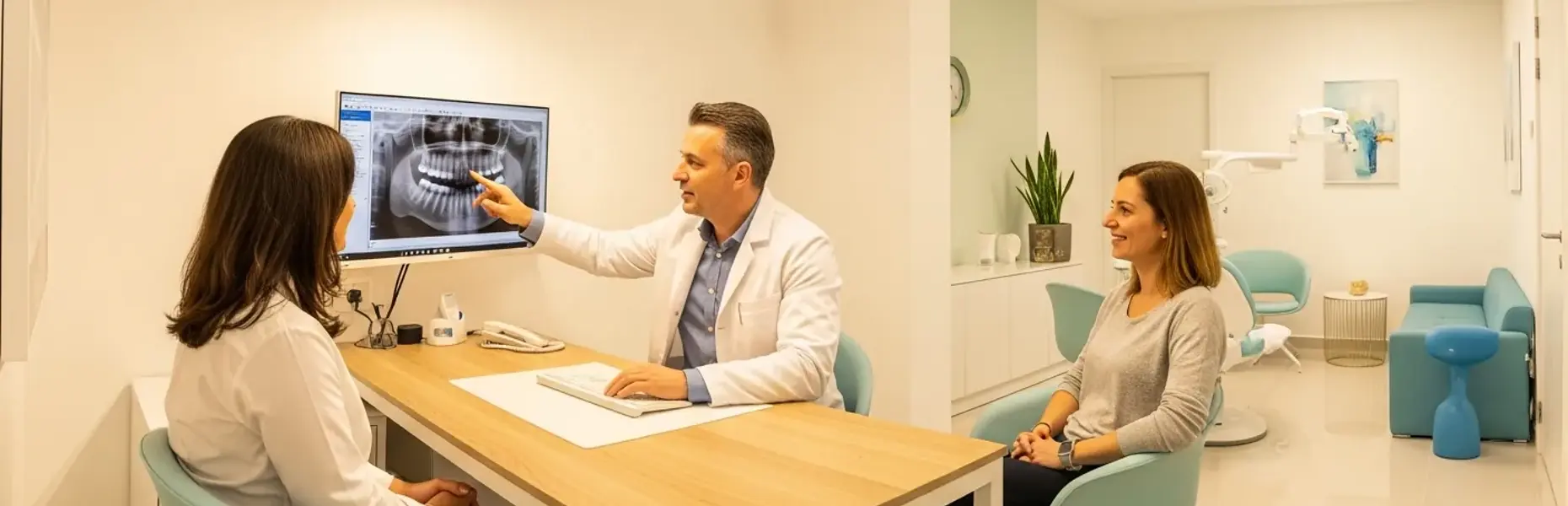
Implants work like natural tooth roots
Implantology - placing the implants and their subsequent prosthetic restoration - is part of the daily routine of our practice in Nidderau. We can offer a sensible implant-supported solution for almost every situation.
Where appropriate we use modern three-dimensional planning methods. They allow a minimally invasive procedure with few complications - which means more comfort for you during treatment and often a quicker recovery.
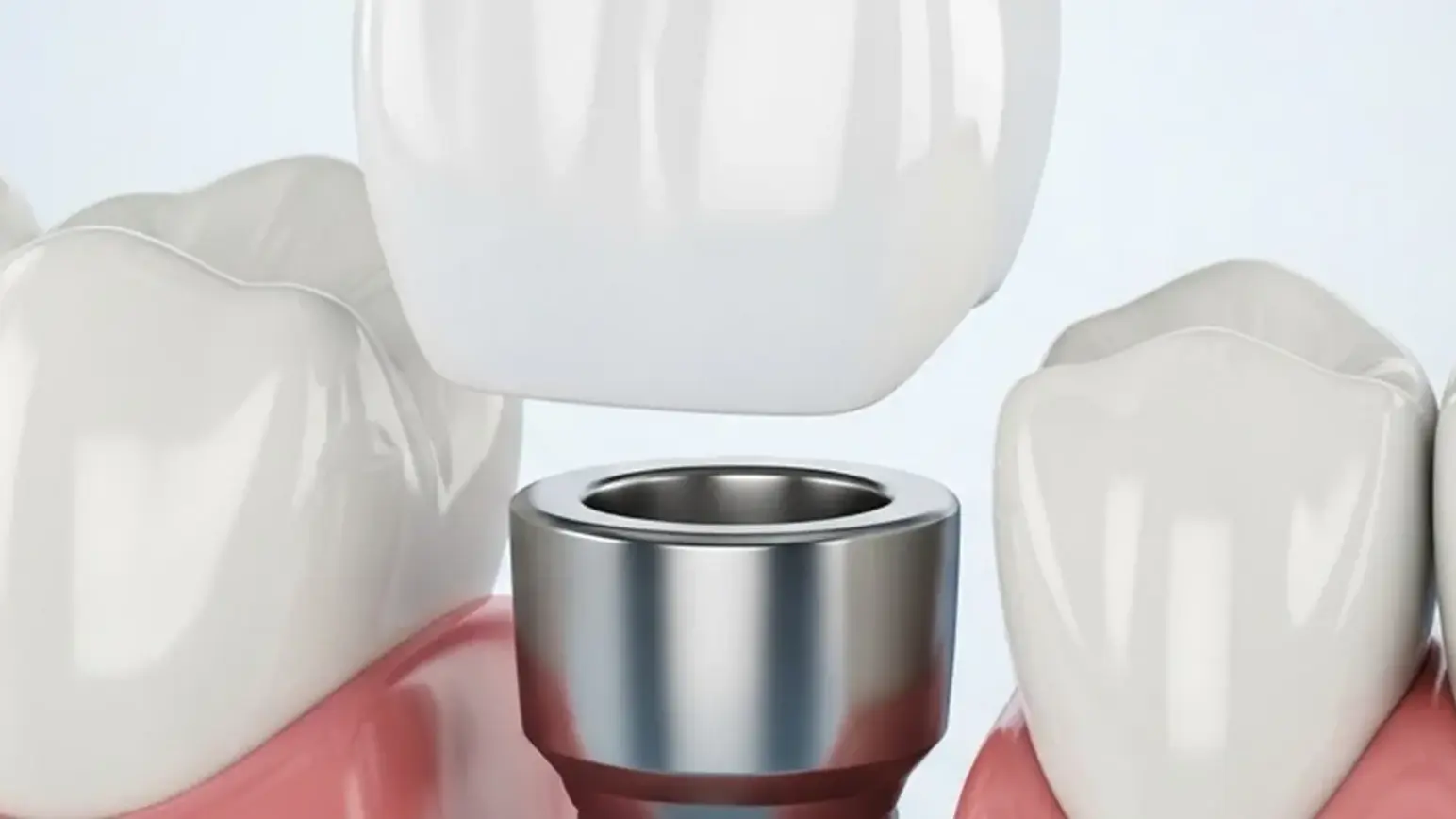
One or more teeth are missing
If one or more teeth are missing, an implant restoration offers an ideal solution for closing the gap. In the visible anterior region aesthetics are an important aspect: an implant-supported tooth should fit in among your own teeth and finish harmoniously against the gum.
Healthy tooth structure is preserved, because the neighbouring teeth do not have to be ground down to attach an implant-supported crown or bridge. The size of the gap and the quality of the bone determine the number and position of the implants.
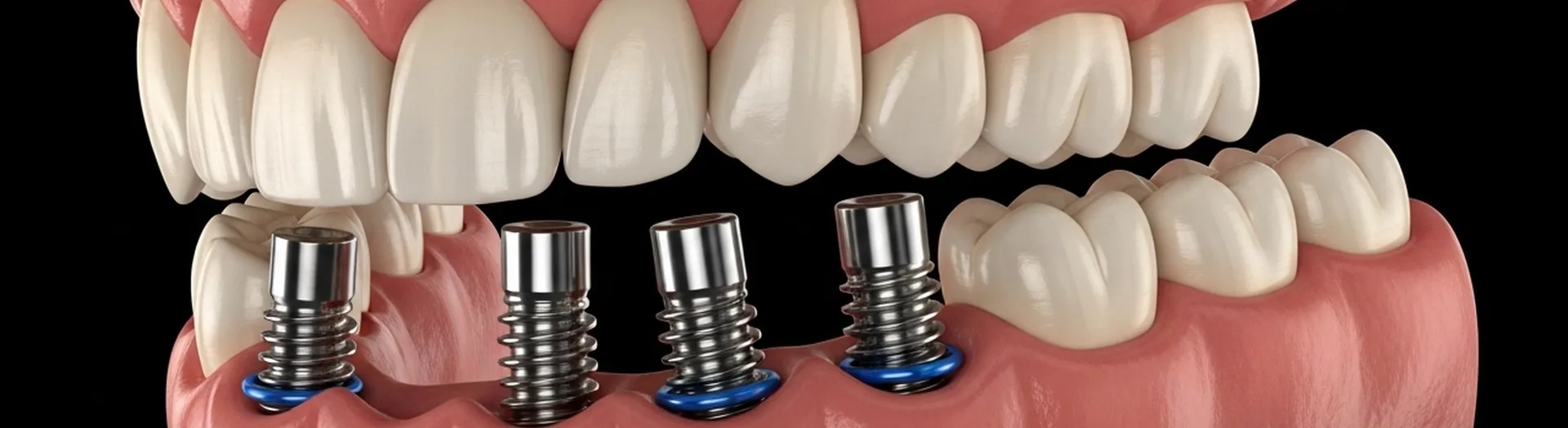
Restoring an edentulous jaw
If all teeth are missing in the upper or lower jaw, implants can be used to anchor complete artificial rows of teeth in the jaw or to attach removable, implant-supported dentures. This offers not only aesthetic but above all functional advantages compared with the otherwise usual mucosa-supported denture.
With the implant version the palate remains free of denture material - you can eat, laugh, speak and taste without restriction again. Painful pressure points can be avoided because the denture is held firmly by the implants.
More than restoring the chewing function
For patients without teeth in particular, successful implant treatment means more than restoring the chewing function. Being able to bite firmly again, to speak confidently and to laugh freely gives self-assurance at work, in everyday life and in social activities.
Comparing a conventional denture with an implant-supported one, the implant solution performs considerably better: in comfort, stability, chewing ability, speech aesthetics and ease of cleaning.
The key facts at a glance
- Implants replace individual teeth, several teeth or a whole row of teeth in an edentulous jaw.
- Neighbouring teeth do not have to be ground down - healthy tooth structure is preserved.
- In an edentulous jaw, fixed bridges or implant-supported dentures can be anchored; the palate stays free.
- The number and position of the implants depend on the size of the gap and the quality of the bone.
- Where required, three-dimensional planning is used, which allows a minimally invasive approach.