
A confident feeling when speaking, eating and laughing
Anyone who has lived for years with a loose denture or a gap gets used to being careful: biting carefully, laughing carefully, speaking carefully. Implant-supported teeth take away exactly this caution.
The benefit is therefore not only medically measurable but noticeable in everyday life - at the table, in conversation and in every photo.
Dental implants are a long-term investment in your health
With good care, implants can last a lifetime. They are a part of you and do their work around the clock, unnoticed, effectively and reliably.
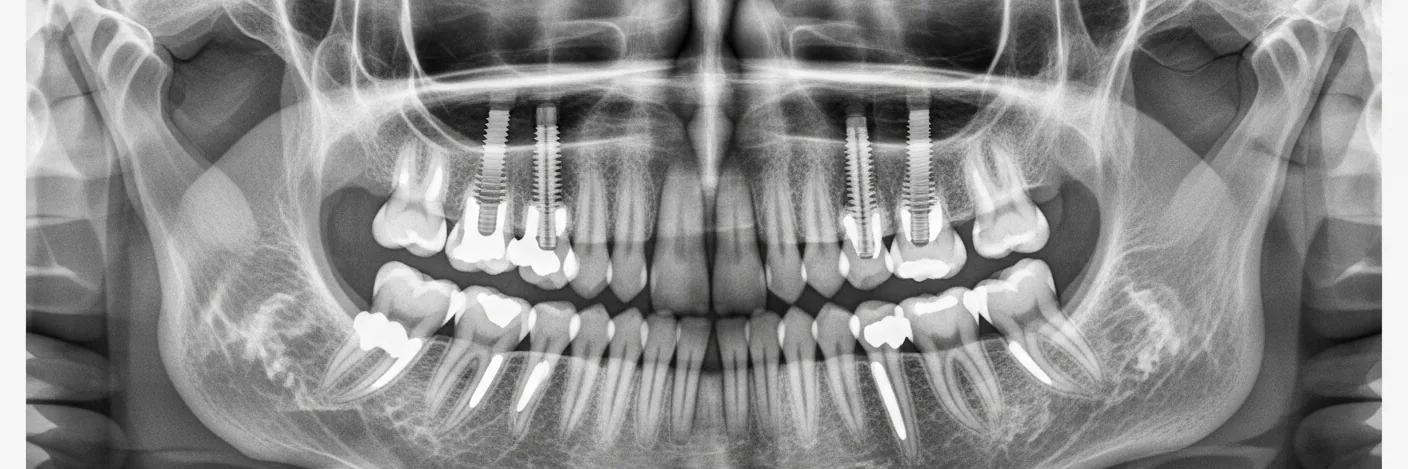
Dental implants are usually the best solution when it comes to a denture of high aesthetic and functional quality. They load the bone in a natural way, give dentures a firm hold again and help to prevent painful pressure points. They can be placed even at an advanced age.
Whether a single tooth, a bridge or a denture: implant-supported solutions look like your own teeth and feel that way too. Implants transfer the chewing forces to the surrounding bone and stimulate its natural metabolism. The feared bone loss due to a lack of loading is thus prevented and the natural expression of the face is preserved.

Minimally invasive: less strain, faster healing
Minimally invasive means more comfort for you, considerably less strain and faster wound healing. We can place implants gently, with only minimal incisions and often without prior bone augmentation.
New surgical techniques allow us to work more efficiently and in a more patient-oriented way - the high wearing comfort of implantological solutions is a decisive plus for quality of life, at any age.
The key facts at a glance
- Implants transfer chewing forces to the jawbone and stimulate its metabolism - this helps to prevent bone loss caused by a lack of loading.
- With good care and regular check-ups, implants can last a very long time.
- They give loose dentures a firm hold again and help to prevent painful pressure points.
- Implants can be placed even at an advanced age; what matters is the clinical findings, not the year of birth.
- Minimally invasive techniques mean smaller incisions, less strain and faster wound healing.